
By Leanne Mollica
Mortgage Broker | Mortgage Architects – Team Borle
Founder, My Mortgage Strategy
Serving Salmon Arm, the Shuswap, and British Columbia
If you’ve filled up your tank lately, you’ve probably noticed it.
Gas prices in BC have jumped roughly $0.20/L over the past couple of weeks. While that might feel like just another hit to your wallet, it actually has a ripple effect that reaches much further.
Including your mortgage rate.
The Connection Most People Don’t See
At first glance, gas prices and mortgage rates seem completely unrelated.
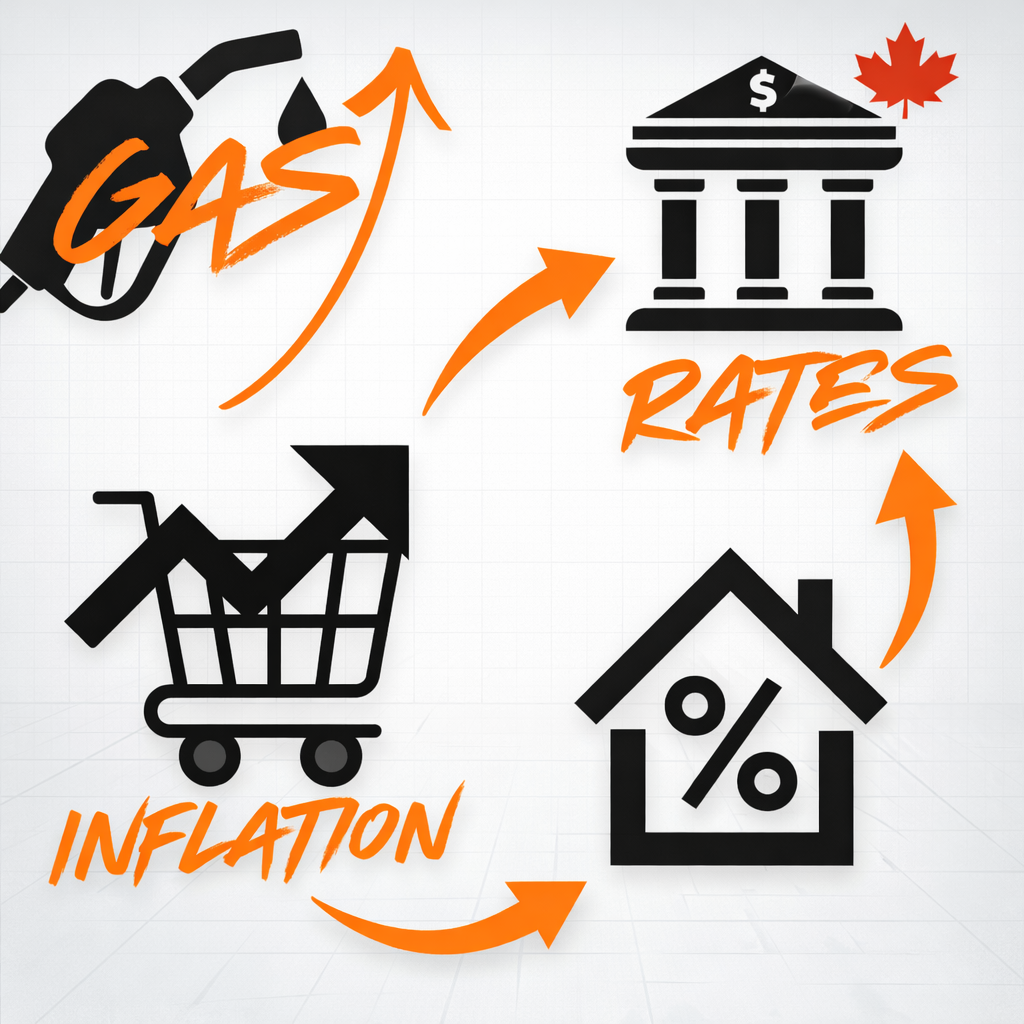
But in reality, they’re part of the same economic chain reaction:
Gas Prices ↑ → Inflation ↑ → Interest Rates ↑ → Mortgage Rates ↑
Let’s break that down.
Step 1: Rising Gas Prices Drive Inflation
When fuel prices increase, it doesn’t just impact what you pay at the pump.
It affects:
- Transportation and shipping costs
- The price of goods and groceries
- Travel and service costs
Businesses pass these costs on to consumers, and suddenly, everything costs more.
That’s inflation.
Step 2: Inflation Influences the Bank of Canada
The Bank of Canada’s primary goal is to keep inflation under control.
When inflation remains elevated or begins to rise again, they have to respond.
That typically means:
- Holding interest rates higher for longer
- Delaying rate cuts
- And in some cases, even considering rate increases
In simple terms, borrowing costs don’t come down as quickly as people expect.
Step 3: Bond Yields and Fixed Mortgage Rates
This is where it directly impacts homeowners and buyers.
Fixed mortgage rates are heavily influenced by bond yields, which react quickly to inflation expectations.
When inflation pressures rise, such as from higher energy costs:
- Bond yields tend to increase
- Fixed mortgage rates often follow
What This Means for You
If you’re:
- Buying a home
- Up for renewal
- Considering a refinance
This matters more than you might think.
While headlines may suggest rates are “coming down soon,” inflation signals like rising gas prices can delay that timeline.
Timing Matters More Than Ever
With a Bank of Canada announcement approaching, economic signals—like rising fuel costs—are being closely watched.
The reality is that by the time headlines report that rates are rising, the change has often already happened.
My Advice (From a Mortgage Strategy Perspective)
Avoid making decisions based on:
- Headlines
- Hype
- Market speculation
Instead, focus on:
- Your timeline
- Your financial position
- A strategy that protects you from rate volatility
Want to Know How This Impacts You Specifically?
Every situation is different.
If you’re trying to decide whether to:
- Lock in a rate
- Wait things out
- Explore refinancing options
I’m happy to walk you through it in a way that makes sense for your situation.